

Enterprise coaching software only works in unionized, regulated, and deskless manager environments when we start with the real limits first. Labor rules, compliance, access to devices, safety rules, and frontline workflows set the frame. Once that frame is clear, we can add AI, content, and coaching methods in a way that actually fits daily work instead of fighting it.
Many large programs fail in these settings because they assume everyone is at a desk, has time for long trainings, and is comfortable sharing sensitive topics in a new tool. One-size-fits-all content, vague privacy language, and office-centric design create low trust and low usage. People on the floor, in the field, or in a call center simply ignore it.
Our core view at Pinnacle is simple: when coaching sits inside tools people already use, is aligned with governance, and matches manager realities, it becomes safer and more effective. In this article, we walk through key design constraints, governance patterns, and adoption strategies for HR and L&D leaders who want enterprise coaching software that actually works in their hardest environments.
Unionized, regulated, and deskless environments differ because they have non‑negotiable constraints around data use, discipline, consistency, and manager protection that must be designed in from day one. If coaching software ignores these, it will not be trusted or used.
For unionized environments, some of the common factors are:
For regulated environments, the pressure points often include:
Deskless environments bring a different set of realities:
These factors change how we can use AI coaching. We need:
Think about a unionized healthcare system trying to help nurse managers give better feedback. If coaching feels like a new way to track every conversation, or like a back door into performance files, people will push back. If it feels like a private, protected space to prepare for tough conversations, aligned with union protections, adoption goes up.
We design coaching software for these environments by treating data boundaries, labor agreements, roles, and tooling realities as non‑negotiable design inputs, not issues to patch later. The goal is for coaching to feel protective and empowering, not risky.
On the data and privacy side, we focus on:
For example, the system might clearly state that it will not pull from EHR notes, grievance files, or disciplinary records. It might also clarify which information is kept only for personal coaching and never visible to HR.
Role-based visibility is key. We design:
Policy and governance alignment starts before rollout. We work with HR, legal, compliance, and sometimes union leadership to map:
Workflow and tool choices matter too. In collaboration tools like Slack, we:
For deskless teams, we might lean on scheduling apps, shared tablets, or huddle routines where managers bring AI-generated prompts into standups, without asking frontline staff to log into a new system.
Our AI coaching companion may look different in a financial services call center than in a municipal utility with unionized field crews. In the call center, it may sit inside chat tools managers already use, with clear record-keeping rules. In the utility, it might focus on pre-shift huddle guides and safety conversation prompts that managers open on a tablet before going out into the field.
Governance turns AI coaching into an asset by making its purpose, boundaries, and oversight explicit and defensible. Without that, it will be seen as a risk, especially under legal or public scrutiny.
A practical governance model usually covers:
Clear decision rights matter. You want written answers to questions like:
For managers and employees, transparent guardrails are just as important. Plain-language guides should explain:
Common fears deserve direct answers, such as:
On the oversight side, we suggest:
Mid-year and end-of-year points are natural times to refresh these rules. By then, HR and L&D can see what is working, where people are nervous, and what needs tightening.
Frontline adoption is driven by fast, specific help in real moments of work, delivered through existing routines, not by another standalone platform or long training.
Manager time is tight. A warehouse supervisor, nurse manager, or store manager often has:
So coaching support has to work in 5‑ to 10‑minute slices, like:
Embedding AI coaching in trusted routines helps. For example:
We see stronger traction when managers get immediate, real-world value, such as:
The most effective message to managers is often: this is your private, just-in-time management partner. Use it on the real problems on your plate this week, not as a side project.
You should evaluate enterprise coaching software by testing it against your toughest constraints and highest‑value use cases, not by relying on generic feature lists.
Some practical questions for HR and L&D teams:
Scenario-based testing helps. You might:
On the vendor side, you want:
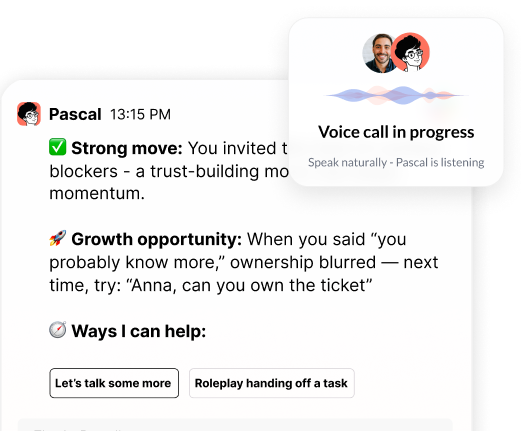
Our AI coaching system, for example, is built to live inside Slack with enterprise security and governance at the core, which meshes well with large organizations that need tight controls around coaching content.
You can turn union rules, regulations, and deskless realities into an advantage by treating them as design inputs for coaching, not obstacles. Done well, this produces coaching that is safer, fairer, and more effective than generic programs.
A practical playbook looks like this:
We also suggest a phased, learning-focused rollout. Begin with a few representative teams, refine prompts and guardrails with their input, involve worker and union voices early, then expand. Aggregate coaching patterns can then inform your broader leadership development plans without exposing individuals.
At Pinnacle, we built our AI coaching approach to support this kind of thoughtful, grounded implementation of enterprise coaching software. If you are an HR or L&D leader, a useful next step is to pick three frontline or regulated use cases and ask, could our current tools support a manager in this specific moment, this week? If the honest answer is no, it might be time to rethink how coaching lives inside your organization.
If you are ready to elevate how your organization develops leaders, our enterprise coaching software gives you a clear, scalable path forward. At Pinnacle AI, we help you turn scattered coaching efforts into a unified, measurable system that actually moves the needle on performance. Explore how AI-guided workflows, real-time analytics, and consistent coaching frameworks can align your people strategy with business outcomes. Take the next step today and start building a coaching culture that compounds value over time.

.png)
.webp)
“Thank you for setting the great foundation for my promotion; now I have a plan!"

Curious to see how AI Coaching can 10X the impact and scale of your development initiatives. Book a demo today for: