

Real-time coaching software closes the gap between when work happens and when feedback shows up. That gap is where performance actually changes or does not. If feedback only appears in 1:1s, reviews, and calibration meetings, you are coaching history, not behavior.
Most enterprises live with a broken feedback loop. People get feedback that is late, vague, inconsistent by manager, and separate from the real context of their day. By the time comments show up in a review, the project is over, the damage is done, and learning is mostly theoretical.
Late Q2 is when many HR and L&D leaders are running mid-year reviews, calibration sessions, and planning for second-half performance work. It is also the best moment to rewire how feedback actually flows. From our work building AI coaching inside everyday tools like Slack, we see the same pattern: you do not fix feedback with more workshops alone; you fix it by putting practical coaching inside the work itself.
In this article, we walk through how to spot broken feedback loops, what real-time coaching software really does, how it changes manager behavior, and how to pilot it without overwhelming already stretched teams.
A feedback loop is broken when people do not get timely, specific input they can act on, and when the system does not learn from what happens next. If you are an HR or L&D leader, you probably see the signs already.
Common red flags include things like:
A familiar scene: a VP of Sales hears in a talent review that a frontline manager is poor at coaching. Two strong reps have already left for better growth elsewhere. The comments are months old, filtered through multiple layers, and now sit in a formal forum where everyone feels defensive. The people who needed help did not get it when it mattered.
The causes are usually structural, not about effort or intent:
Once you see that pattern, the real question becomes simple: how do you shrink the distance between work that is happening right now and coaching that usually arrives months later?
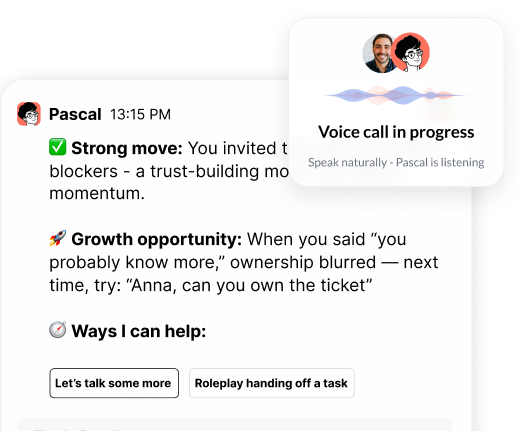
Real-time coaching software uses data from tools people already use, like Slack messages, meeting notes, or task updates, to offer in-the-moment coaching prompts. It focuses on decisions and conversations that are unfolding right now, not generic theory.
Just as important, it is not designed to replace your existing leadership programs or human coaching. It augments them.
In practice, it tends to do three simple things very well:
The key principle: coaching does not live in a separate portal that people must remember to open. It appears in the flow of work, at the moment of choice, with low friction. HR, L&D, and senior leaders still define expectations and programs. The software carries that guidance into the chats, comments, and meetings where behavior actually shows up.
Technology alone does not make leaders better, but it can change habits by giving simple, better options at the exact right time.
Consider two common manager patterns.
Before real-time coaching:
With real-time coaching inside tools like Slack:
Lasting habits form because managers get:
For HR and L&D, this means:
If you embed these nudges around mid-year, you improve the quality of conversations that feed into end-of-year reviews instead of repeating the same old patterns.
None of this works if people do not trust the tool. Managers and employees need to know why it exists, what it does, and what it will never do.
We see a few non-negotiables here:
A simple policy might say that the AI can surface aggregate patterns, such as a tendency to give feedback only after issues escalate, but will not create individual scores for coaching quality.
Rollout also matters. A good approach is:
The frame should always be partnership. AI can act as an always-on coach sitting quietly in the background. Human leaders still handle judgment, relationships, and real career calls.
Before turning on any tool, decide which broken loop you want to fix first. For example:
Then build a simple, phased pilot.
A 60-day window around late Q2 can work well:
As you grow, connect the coaching prompts to existing systems:
At Pinnacle, we build our AI coaching companion to live inside everyday tools and support this kind of pilot-first approach, whether your teams are in a high-heat city or spread across cooler regions.
Fixing broken feedback loops is less about tearing down your whole performance system and more about putting simple, practical coaching into the tools people already use all day. When coaching shows up inside Slack at the moment of choice, every message, meeting, and project can become a small chance to lead better.
The payoff is shared. HR and L&D get more consistent feedback tied to your standards, managers get less guesswork and more confidence in tough moments, and employees get fewer surprises and clearer paths to grow where they are. That is the outcome we design for at Pinnacle: an AI coaching companion that quietly upgrades conversations right where they happen, so your feedback loops finally start working for everyone.
If you are ready to give your managers the tools they need to coach in the moment, our team at Pinnacle can help you take the next step. Explore our real-time coaching software to see exactly how it can fit into your existing workflows and accelerate results. We will work with you to identify the right rollout plan so your reps see value from day one. Start now so your next conversation with a customer becomes a measurable win for your business.



“Thank you for setting the great foundation for my promotion; now I have a plan!"

Curious to see how AI Coaching can 10X the impact and scale of your development initiatives. Book a demo today for: