

AI coaching platforms can deliver private employee coaching while giving HR anonymized workforce trends. The architecture separates individual conversations (encrypted, never shared with managers) from organizational patterns (aggregated across minimum sample sizes). This solves a core HR tension: employees won't use tools that feel like surveillance, but organizations need data to make talent decisions.
The question isn't whether the technology exists. It's whether these systems actually protect privacy as promised—and whether the trade-offs are worth it.
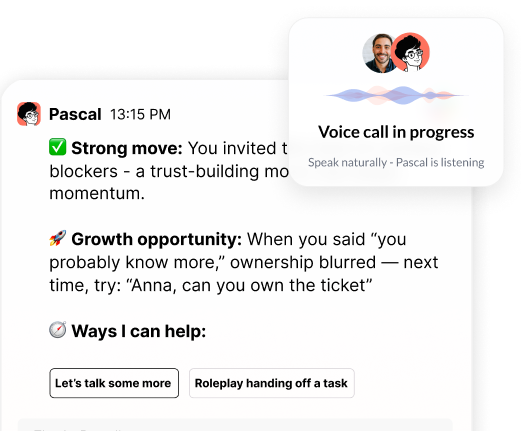
You get an AI coach that joins your meetings, gives you real-time feedback, and helps you work on specific skills (delegation, difficult conversations, executive presence). Your conversations stay private. HR sees aggregated themes: "35% of engineering managers are working on delegation" without knowing which managers.
The model works only if employees trust the privacy protections. Gartner found 83% of employees fear workplace monitoring. If people think their boss can see their coaching sessions, they'll self-censor and the system becomes useless.
Here's the architecture: Individual coaching runs on encrypted channels isolated from organizational reporting. HR dashboards show engagement metrics (who's using the tool, how often), common themes across teams, and skill development patterns. Aggregation algorithms strip identifying information and require minimum sample sizes (typically 10 people) before surfacing any trend.
The catch: if the AI joins your meetings to coach you, it's recording your colleagues who didn't opt in. Most platforms handle this with opt-out notifications, but the colleague surveillance problem remains unresolved.
Traditional executive coaching costs $10,000–$50,000 per person annually and reaches less than 5% of the workforce. Coaches meet monthly or quarterly, missing real-time needs. They protect client confidentiality completely, giving organizations zero visibility.
Engagement surveys reach 60–100% of employees but capture retrospective snapshots quarterly or annually. Response rates hover around 60–70%. High-level sentiment scores lag actual dynamics by months. Employees get no individual development support.
Learning management systems scale content delivery but suffer 20–30% completion rates (Shift eLearning). Completion doesn't correlate with performance improvement. The systems stay disconnected from daily work.
AI coaching platforms cost $100–$500 per employee annually and reach 80–100% of the workforce. They deliver real-time feedback in workflow and generate continuous behavioral insights. They can't replace human coaches for complex emotional work, and they require organizational change management for adoption.
Data Breakdown:
• Feature: Cost per employee | Traditional Coaching: $10,000–$50,000 | Engagement Surveys: $10–$50 | LMS: $50–$200 | AI Coaching: $100–$500
• Feature: Reach | Traditional Coaching: <5% of workforce | Engagement Surveys: 60–100% | LMS: 20–100% | AI Coaching: 80–100%
• Feature: Frequency | Traditional Coaching: Monthly/quarterly | Engagement Surveys: Quarterly/annual | LMS: On-demand | AI Coaching: Real-time
• Feature: Individual development | Traditional Coaching: High | Engagement Surveys: None | LMS: Low | AI Coaching: Medium
• Feature: Org insights | Traditional Coaching: None | Engagement Surveys: Medium | LMS: Low | AI Coaching: High
• Feature: Privacy protection | Traditional Coaching: Complete | Engagement Surveys: Anonymized | LMS: N/A | AI Coaching: Anonymized aggregation
Five categories of insights emerge from aggregated data:
Engagement metrics show who's using the tool and how often. High engagement correlates with teams experiencing rapid change, new managers, or performance challenges. Low engagement signals awareness gaps or trust issues.
Thematic analysis reveals what people are working on. When 40% of mid-level managers focus on delegation, HR knows to prioritize delegation training. When sales teams concentrate on difficult conversations, leadership understands frontline challenges.
Skill gap identification moves beyond self-reported surveys to behavioral observation. If managers struggle with feedback delivery despite completing training, the platform flags the knowing-doing gap.
Behavioral trend tracking measures cultural transformation in real-time. Organizations implementing new leadership competencies can track adoption weekly rather than waiting for annual reviews.
Cultural health indicators reveal communication pattern shifts, collaboration network changes, and sentiment trends across departments. These provide early warning signals for retention risks or team dysfunction.
The insights only appear when sufficient data exists to protect anonymity. If fewer than 10 people in a department use the platform, no department-level insights surface.
Three mechanisms: conversation encryption, anonymized aggregation, and user controls.
Conversation encryption prevents organizational access to one-on-one coaching interactions. No manager, HR leader, or system administrator can see these conversations.
Anonymized aggregation surfaces organizational insights only when minimum sample sizes exist. Themes must appear across multiple users before becoming visible to HR. This prevents reverse-engineering individual behavior from aggregate reports.
User controls give employees transparency and choice. Platforms send notifications explaining opt-out options. Employees can disable meeting observation, limit data collection, or pause coaching entirely.
The technical separation operates at infrastructure level. Coaching conversations flow through encrypted channels isolated from organizational reporting systems. Aggregation algorithms run on anonymized datasets. SOC2 compliance and security audits verify these protections.
The unverified claim: We have only vendor assurances that these architectures work as described. No third-party audits, academic research, or investigative journalism confirms these systems protect privacy as promised. SOC2 compliance is a security audit framework, not a privacy certification. Equifax was SOC2 compliant when they leaked 147 million records.
The selection bias problem: If employees can opt out, organizational insights become biased toward people comfortable with surveillance. Platforms don't address this.
The anonymization challenge: If you're the only woman in engineering working on executive presence, aggregating your data with nine male colleagues doesn't protect your identity. Anonymization at small sample sizes remains difficult.
Building employee trust requires transparent communication about data collection, usage, and access. Employees need to see exactly what gets collected and who can see it. Visible leadership adoption signals the platform serves development, not surveillance.
Early adopters champion the tool to peers. HR should identify these advocates, support their success, and amplify their stories.
Integration with existing programs prevents AI coaching from becoming another disconnected tool. The platform should complement human coaching, reinforce leadership competencies from training programs, and align with performance management frameworks.
Heavily regulated industries (healthcare, life sciences, financial services) require additional compliance verification, legal review, and phased rollouts starting with pilot groups.
Demonstrating ROI demands clear metrics established before launch. Track engagement rates, skill development progress, behavioral change indicators, and business outcomes (manager effectiveness scores, retention rates). MIT research shows 95% of AI projects fail to deliver expected results because organizations invest in tools but fail to drive adoption and measure impact.
• AI coaching platforms separate individual conversations (encrypted, private) from organizational insights (anonymized, aggregated). This solves the trade-off between employee trust and data visibility.
• The architecture works only if employees trust the privacy protections. We have vendor claims but no independent verification that these systems protect privacy as promised.
• HR gets five categories of insights: engagement metrics, thematic analysis, skill gap identification, behavioral trend tracking, and cultural health indicators. These replace quarterly surveys with real-time workforce intelligence.
• Unresolved problems: colleague surveillance (the AI records people who didn't opt in), selection bias (opt-outs skew the data), and anonymization challenges (small sample sizes don't protect identity).
• Implementation success depends on transparent communication, visible leadership adoption, integration with existing programs, and clear ROI metrics.
The technology exists. Whether it delivers on its privacy promises—and whether the trade-offs are acceptable—remains an open question.
Ready to evaluate AI coaching for your organization? See how Pascal works inside Slack to deliver development support while giving HR workforce intelligence.
Header photo by BaljkanN 4 on Unsplash

.png)
.webp)
“Thank you for setting the great foundation for my promotion; now I have a plan!"

Curious to see how AI Coaching can 10X the impact and scale of your development initiatives. Book a demo today for: