

Purpose-built AI coaching platforms are standalone systems engineered for leadership development with proprietary coaching frameworks and behavioral science. Embedded AI coaching integrates general-purpose AI (ChatGPT, Claude) into existing HR tools. The choice determines whether your managers develop sustainable habits or abandon the tool within weeks.
Purpose-built platforms are standalone systems designed exclusively for coaching journeys, built on frameworks developed with International Coaching Federation (ICF) certified coaches. Embedded coaching integrates general-purpose AI into existing workflow tools (Slack, Teams, HRIS platforms, performance management systems) as an added feature.
The distinction determines three outcomes:
Coaching depth: Purpose-built platforms understand coaching methodologies like GROW and situational leadership. Embedded tools provide generic advice without structured development paths.
Contextual awareness: Purpose-built systems build knowledge graphs (interconnected data about your people and culture). Embedded tools lack organizational memory beyond basic system data.
Adoption patterns: Purpose-built platforms require behavior change but sustain engagement. Embedded tools meet managers where they work but see rapid drop-off.
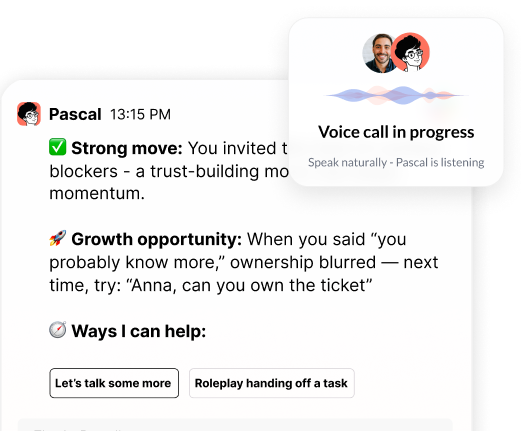
A third category exists: platforms purpose-built for coaching but delivered inside existing workflow tools. Coachello, Risely, and Pascal combine embedded convenience with coaching-specific design. This hybrid approach matters because it solves the adoption problem (managers don't need to learn a new tool) without sacrificing coaching quality.
Purpose-built platforms employ ICF-certified coaches to train their models on proven frameworks, creating systems that guide managers through structured development journeys. Embedded tools apply general-purpose language models to coaching scenarios without specialized training.
This expertise gap manifests in three ways:
Framework application: Purpose-built coaches integrate specific methodologies (GROW model, situational leadership, feedback frameworks) into every interaction. Embedded tools provide conversational responses without structured development paths.
Behavioral science grounding: Purpose-built platforms incorporate research on habit formation, behavior change, and adult learning. They deliver coaching at moments when managers are most receptive (immediately after meetings or before difficult conversations) rather than waiting for managers to remember to seek help.
Escalation protocols: Purpose-built systems include guardrails for sensitive workplace topics (harassment, discrimination, mental health concerns) with clear escalation to human HR expertise. Embedded tools lack these safeguards, creating compliance and risk exposure.
Contextual awareness (the AI's understanding of your specific people, culture, goals, and interactions) determines whether managers trust and apply the guidance they receive.
Purpose-built platforms build knowledge graphs from performance reviews, 360 feedback, meeting participation, and communication patterns. Embedded tools access only the data within their host system (job titles, org charts, transaction records).
Purpose-built platforms join meetings, observe team dynamics, and build persistent memory of how individual managers interact with their teams. This enables guidance like: "Based on your last three 1:1s with Sarah, you've focused on project status. Consider dedicating your next conversation to her career development goals."
Embedded tools can answer "How do I give difficult feedback?" but cannot say "Here's how to approach the feedback conversation with Sarah specifically, given her communication style and your recent interactions."
Embedded AI coaching achieves faster initial adoption because managers already use the host platform daily. But engagement typically drops within three months as the novelty fades and generic guidance fails to drive behavior change.
Purpose-built platforms require deliberate adoption but sustain engagement when properly implemented because they deliver measurable value in managers' actual work.
The adoption curve differs:
Embedded tools (Months 1-3): 40-60% of managers experiment initially. Rapid drop-off as guidance feels generic. Becomes "just another feature" managers ignore. No behavior change measurement.
Purpose-built platforms (Months 1-6): 20-30% early adopters. Sustained engagement as managers see results. Viral growth through peer recommendations. Measurable improvement in direct report feedback.
Hybrid platforms (Months 1-6): Combine embedded convenience with purpose-built effectiveness. Pascal customers report saving 150 hours annually per manager while achieving 20% increases in manager NPS scores (measured through quarterly direct report surveys).
Embedded AI coaching features launch within 2-4 weeks as platform updates with minimal additional cost (often included in existing licenses or $5-15 per user monthly).
Purpose-built platforms require 6-12 week implementations with dedicated budgets of $25-75 per user monthly for mid-market organizations, but deliver ROI through measurable manager effectiveness improvements.
Data Breakdown:
• Cost Category: License fees | Embedded: $5-15/user/month | Purpose-Built: $25-75/user/month | Hybrid: $25-50/user/month
• Cost Category: Implementation time | Embedded: 2-4 weeks | Purpose-Built: 6-12 weeks | Hybrid: 4-8 weeks
• Cost Category: Integration effort | Embedded: Minimal | Purpose-Built: Moderate | Hybrid: Moderate
• Cost Category: Customization | Embedded: Limited | Purpose-Built: Extensive | Hybrid: Extensive
• Cost Category: Behavior change measurement | Embedded: None | Purpose-Built: Built-in | Hybrid: Built-in
The hidden costs of embedded solutions emerge over time. Without measurable behavior change, organizations cannot demonstrate ROI on their broader leadership development investments. Purpose-built platforms provide leading indicators (coaching engagement, conversation quality, feedback frequency) that predict performance improvements before they appear in annual reviews.
Choose embedded tools when:
• You have limited budget for standalone leadership development tools
• Managers already have high engagement with existing platforms
• You need rapid deployment with minimal change management
• You're willing to accept lower engagement for lower cost
Choose purpose-built platforms when:
• Leadership development is a strategic priority with dedicated budget
• You need measurable behavior change to demonstrate ROI
• Your managers struggle with consistent coaching and feedback
• You're willing to invest in proper implementation and adoption
Choose hybrid platforms when:
• You want purpose-built coaching expertise without requiring managers to learn a new tool
• You need both high adoption rates and measurable behavior change
• You have budget for specialized tools but want to minimize change management
• You need coaching that understands your organizational context, not just generic advice
Focus on five areas that determine whether the investment drives measurable manager effectiveness:
Coaching foundation: Which ICF-certified coaches trained your models? What specific coaching frameworks does your platform use? (Generic AI tools cannot answer with specificity.)
Contextual integration: How does your platform build knowledge of our people, culture, and goals? What data sources do you integrate? (Purpose-built platforms connect performance reviews, 360 feedback, competency frameworks, and meeting observations.)
Proactive engagement: Does your coach wait for managers to ask questions, or does it surface guidance at critical moments? (Reactive tools require managers to remember to seek help. Proactive coaches deliver feedback immediately after meetings when insights are most actionable.)
Sensitive topic handling: What happens when a manager discusses potential harassment, discrimination, or mental health concerns? How do you escalate to human expertise? (Platforms without clear escalation protocols create legal and ethical exposure.)
Measurement framework: What leading indicators do you track? How do you demonstrate behavior change before it appears in annual performance reviews? (Purpose-built platforms measure coaching engagement, conversation quality, feedback frequency, and direct report sentiment shifts.)
• Three approaches exist: embedded features in existing tools, standalone purpose-built platforms, and hybrid platforms that combine purpose-built coaching expertise with embedded delivery
• Purpose-built platforms deliver measurable behavior change through specialized coaching expertise, while embedded tools achieve faster initial adoption but see engagement drop within months
• Contextual awareness (the AI's understanding of your people, culture, and interactions) determines whether managers trust and apply guidance
• Implementation costs differ: embedded tools cost $5-15 per user monthly with minimal setup, purpose-built platforms require $25-75 per user monthly with 6-12 week implementations, hybrid platforms fall in between
• Evaluate vendors on coaching foundation (ICF frameworks), contextual integration (organizational knowledge), proactive engagement (moment-based guidance), sensitive topic handling (escalation protocols), and measurement framework (leading indicators)
See how Pascal works inside Slack and Teams to deliver purpose-built coaching where your managers already work. Visit heypinnacle.com to learn more.
Header photo by Bluestonex on Unsplash

.png)
.webp)
“Thank you for setting the great foundation for my promotion; now I have a plan!"

Curious to see how AI Coaching can 10X the impact and scale of your development initiatives. Book a demo today for: