

Embedded AI tools integrate general-purpose AI into existing platforms. Purpose-built AI coaches are standalone systems engineered for coaching with specialized frameworks and organizational context. The distinction matters because it determines whether managers adopt the tool and whether guidance translates into results.
Embedded AI tools add conversational capabilities to existing platforms using general-purpose language models. Purpose-built AI coaches are standalone systems built for coaching journeys with behavioral science foundations and coaching workflows.
Embedded architecture wraps general AI into tools you already use—your HRIS, Slack, performance management systems. It's fast to deploy because the infrastructure exists. These tools provide advice disconnected from your culture, values, and leadership principles.
Purpose-built systems take a different path. Coaches train the models, creating expertise that generic AI cannot replicate. These platforms process organizational knowledge (competency frameworks, career ladders, company values) and build persistent memory of how managers work.
The data layer reveals the gap. Embedded tools access transactional data: calendar events, meeting transcripts, basic profile information. Purpose-built systems build knowledge graphs tracking relationships, communication patterns, and leadership moments across interactions.
Purpose-built AI coaches process four layers of context: individual employee data, organizational knowledge, real-time work patterns, and temporal context. Embedded tools access only surface-level transactional data from their host platform.
Embedded tools see what happens in their host platform. If it's built into your HRIS, it knows job titles and org charts. If it lives in Slack, it sees message history. These tools don't connect the dots across systems or build longitudinal understanding of how managers grow.
Purpose-built platforms create persistent memory. The system understands communication patterns, team dynamics, and leadership moments that shape development. It knows when a manager struggles with delegation because it's seen three months of meeting patterns where they monopolize discussion.
Organizational context integration separates coaching from generic advice. Purpose-built platforms embed company values, competency frameworks, career ladders, and cultural norms. When a manager asks how to give difficult feedback, the system references your feedback model and competency expectations, not generic best practices.
Embedded AI tools operate reactively—managers must remember to ask questions and drive every interaction. Purpose-built AI coaches proactively surface insights, join meetings, and deliver feedback at moments when learning sticks.
The reactive model puts the burden on managers. You open the tool, type a question, get an answer. If you don't remember to use it, nothing happens. This chatbot model requires constant manager initiative. Initial experimentation gives way to abandonment as the tool fades into the background of forgotten productivity apps.
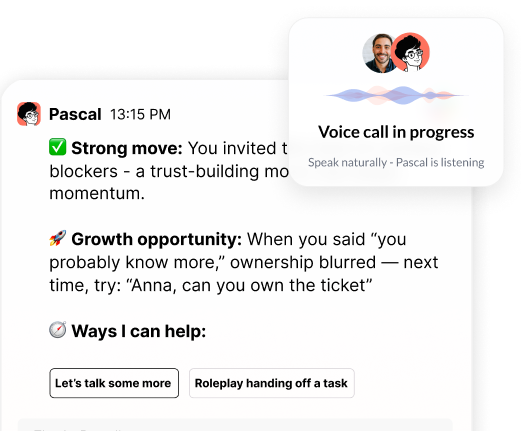
Proactive coaching meets managers at teachable moments. Purpose-built platforms join meetings, surface post-meeting insights, and nudge before critical conversations. The system delivers real-time feedback during meetings, not when managers remember to ask. It knows your 1:1 with a struggling team member is tomorrow and surfaces coaching on difficult conversations the day before.
Behavioral science research confirms that learning sticks when delivered in context. Proactive coaching capitalizes on this by embedding guidance into the flow of work, not scheduling it as a separate activity managers must remember to complete.
Purpose-built AI coaches include enterprise-grade guardrails (moderation flags, sensitive topic escalation, organization-specific controls, SOC2 compliance) built into the coaching architecture. Embedded tools rely on the host platform's general AI safety measures that weren't designed for coaching contexts.
Embedded tools use general content filters designed for productivity use cases. They catch obvious policy violations but lack coaching-specific escalation protocols. When a manager discusses potential termination, embedded tools may provide generic advice without organizational awareness or escalation.
Purpose-built platforms build governance into the coaching architecture. Systems include moderation flags and sensitive topic escalation that routes conversations to HR when appropriate. The platform understands when a coaching conversation crosses into territory requiring human judgment—legal risk, harassment concerns, mental health issues.
SOC2 compliance and data protection matter differently in coaching contexts. Purpose-built systems can maintain privacy standards specific to leadership conversations. Embedded tools often aggregate data across customers to improve general AI capabilities, creating privacy concerns for regulated industries.
Anonymous aggregated insights represent another governance advantage. Purpose-built systems can surface organizational patterns ("30% of managers struggle with delegation") without exposing individual data. This capability helps HR leaders identify systemic issues while protecting privacy.
Embedded AI tools scale quickly across existing user bases but offer limited customization beyond the host platform's capabilities. Purpose-built AI coaches require more intentional deployment but scale coaching expertise (not just access) across managers.
The embedded approach delivers fast rollout. If your organization already uses Microsoft Teams, adding Copilot takes days, not months. But customization remains shallow. You can't embed your competency frameworks, performance review data, or cultural norms. Managers must translate generic advice into your organizational context themselves.
Purpose-built platforms require deeper onboarding but deliver customization. The system integrates company-specific frameworks, performance review data, 360 feedback, and personality assessments. It learns your culture, values, and leadership principles. This customization means coaching feels native to your organization, not imported from generic best practices.
Cost-effectiveness changes the economics of development. Traditional executive coaching costs $200-$500 per hour and reaches only senior leaders. Purpose-built AI coaching delivers 24/7 guidance at a fraction of traditional coaching costs while maintaining quality through coaching frameworks.
The scalability proof point: purpose-built platforms can maintain engagement because they scale expertise, not just access. Managers keep using the tool because it keeps delivering value specific to their challenges, teams, and growth areas.
• Architectural foundations determine outcomes: Embedded tools prioritize convenience through general-purpose AI in existing platforms. Purpose-built coaches prioritize effectiveness through specialized coaching expertise and organizational context.
• Data architecture creates the personalization gap: Purpose-built systems process four layers of context and build knowledge graphs tracking interactions. Embedded tools access only surface-level transactional data.
• Proactive engagement drives sustained adoption: Purpose-built platforms deliver proactive coaching at teachable moments. Embedded tools require reactive, manager-driven interactions that lead to abandonment.
• Governance matters differently in coaching contexts: Purpose-built platforms include coaching-specific guardrails like sensitive topic escalation and SOC2 compliance. Embedded tools rely on general content filters not designed for leadership development.
• Customization determines whether coaching scales expertise or just access: Purpose-built systems integrate company frameworks and culture, delivering contextual guidance that managers continue using.
The architectural differences between embedded AI tools and purpose-built AI coaches are strategic choices that determine whether your investment in manager development drives behavior change or becomes another underutilized productivity tool.
Pascal by Pinnacle works inside Slack, Teams, and your workflow. Learn more at heypinnacle.com.

.png)
.webp)
“Thank you for setting the great foundation for my promotion; now I have a plan!"

Curious to see how AI Coaching can 10X the impact and scale of your development initiatives. Book a demo today for: