
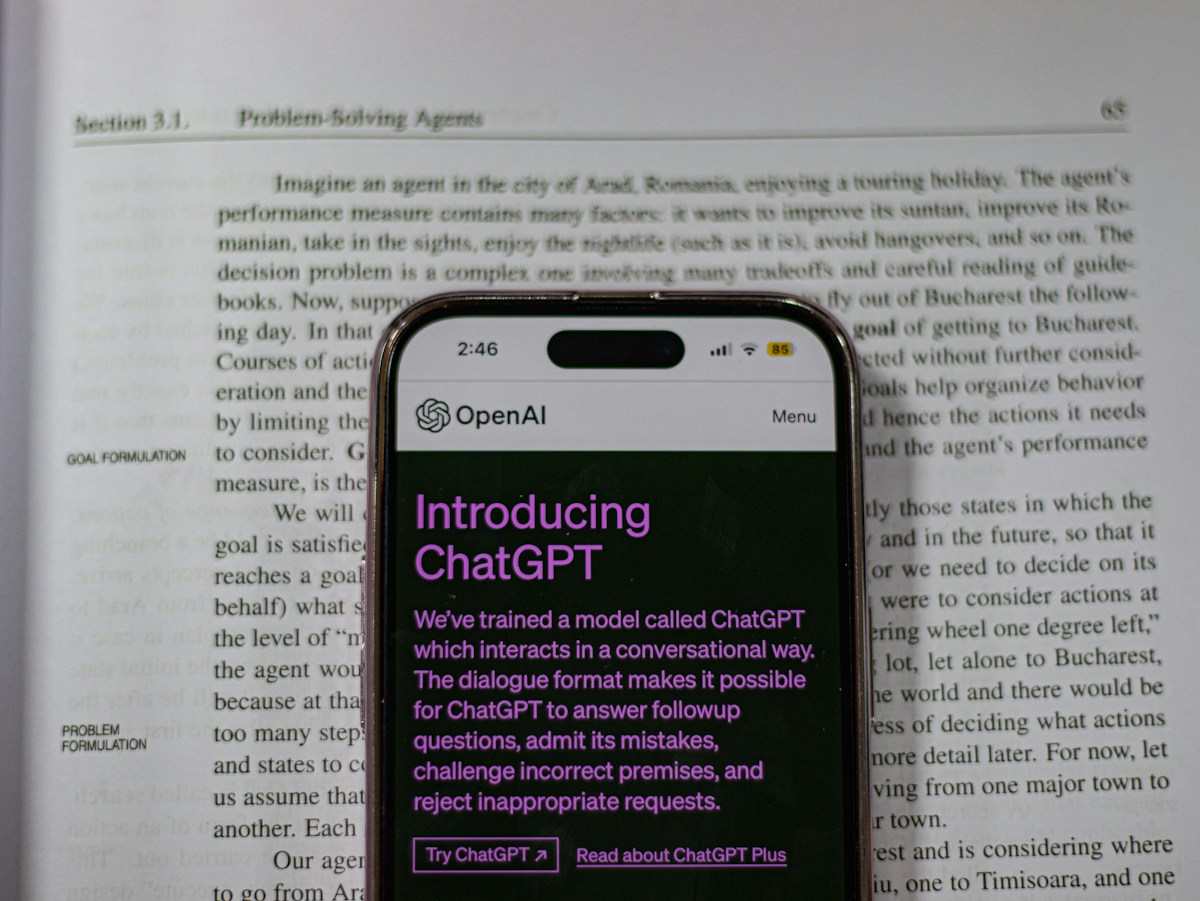
AI coaching integrates organizational context, behavioral data, and coaching frameworks to deliver personalized leadership guidance in the flow of work. Chatbots respond to queries with generic advice. The distinction determines whether your managers develop leadership habits or abandon the tool within weeks.
AI coaching is a purpose-built system for leadership development that combines coaching methodologies, organizational context, and behavioral science to deliver personalized guidance when managers need it. These platforms are trained on coaching frameworks (like GROW: Goal, Reality, Options, Way Forward—a structured approach to helping people solve their own problems) and integrate your company's competencies, values, and culture to provide contextually relevant support.
Traditional executive coaching costs $200-500 per hour and reaches only senior leaders. Group coaching, peer coaching, and internal coaching programs offer mid-tier alternatives at lower cost. AI coaching scales to every manager at a fraction of these costs. Purpose-built platforms join meetings, observe interactions, and provide feedback based on actual leadership moments.
The foundation separates AI coaching from chatbots. AI coaches are built on established frameworks like GROW, solution-focused coaching, and cognitive behavioral approaches. They connect with HRIS, performance data, and communication tools to understand individual contexts. They create habit formation through repeated, contextual interventions rather than one-off information retrieval.
Chatbots are reactive query-response systems that provide generic information without understanding your organizational context, coaching frameworks, or individual development needs. They answer questions but don't guide behavioral change, track progress toward goals, or adapt to your company's leadership principles.
The interaction model reveals the gap. Chatbots wait for questions. AI coaches initiate guidance based on observed needs. Chatbots lack knowledge of your team dynamics, culture, or past interactions.
Memory architecture creates the clearest distinction. Chatbots treat each interaction independently or maintain only session-based memory. AI coaching platforms track development over time and build on previous conversations. When a manager asks for feedback advice, a chatbot offers generic tips. An AI coach references the specific team member, recalls past interactions, and tailors guidance to your organization's feedback culture.
Data Breakdown:
• Dimension: Primary Purpose | AI Coaching: Leadership development & behavior change | Chatbots: Information retrieval & task completion
• Dimension: Interaction Model | AI Coaching: Proactive, continuous, goal-oriented | Chatbots: Reactive, transactional, query-based
• Dimension: Context Awareness | AI Coaching: Deep organizational & individual context | Chatbots: Limited to current conversation
• Dimension: Methodology | AI Coaching: ICF coaching frameworks, behavioral science | Chatbots: Keyword matching, intent classification
• Dimension: Memory | AI Coaching: Tracks relationships and development over time | Chatbots: Session-based or no memory
• Dimension: Integration | AI Coaching: Embedded in workflow (meetings, Slack, Teams) | Chatbots: Standalone interface or basic chat widget
• Dimension: Personalization | AI Coaching: Adapts to values, competencies, culture | Chatbots: Generic or rule-based responses
• Dimension: Outcome Focus | AI Coaching: Behavior change | Chatbots: Immediate answer provision
Confusing AI coaching with chatbots leads to failed implementations, wasted budgets, and manager frustration. When you need leadership development but deploy a chatbot, managers try it once, get generic advice, and never return.
The adoption gap tells the story. Chatbots see 80% abandonment within the first month because they lack the context and methodology to drive change. Contextual AI coaches see higher sustained engagement because they initiate conversations based on observed needs and build on previous interactions.
Strategic positioning matters. HR leaders face a choice: shape how AI transforms work or watch other functions make those decisions for you. Organizations that understand the architectural difference between AI coaching and chatbots will build competitive advantage through manager effectiveness.
Risk management creates another distinction. Chatbots lack guardrails for sensitive HR topics. Purpose-built AI coaching includes moderation flags, escalation protocols for sensitive topics, and organization-specific controls that protect both employees and the company.
Before evaluating vendors, determine whether AI coaching fits your organization's needs, culture, and readiness.
Company size and manager population matter. Organizations with 50+ managers see the clearest ROI from AI coaching. Below that threshold, traditional coaching or peer mentoring programs may deliver better results. Above 200 managers, scaling human coaching becomes cost-prohibitive, making AI coaching a strategic capability.
Culture fit determines adoption. If your organization values human connection above efficiency, or if managers are already overwhelmed with tools, adding AI coaching may create resistance. Successful implementations happen in cultures that embrace experimentation, value data-informed development, and prioritize manager effectiveness.
Current state assessment reveals readiness. Do you have basic HR systems in place (HRIS, performance management)? Are managers comfortable with existing technology? Do you have leadership competencies defined? AI coaching builds on this foundation. Without it, you're not ready.
Alternative approaches deserve consideration. If your managers need tactical skill-building (presentation skills, Excel training), traditional learning platforms work better. If they need deep personal transformation, human coaching remains superior. AI coaching excels at scaling everyday leadership moments: giving feedback, running one-on-ones, navigating team dynamics.
Budget reality check: AI coaching costs less than traditional coaching but more than doing nothing. Calculate your current spending on underutilized learning platforms, external coaching, and manager training programs. If AI coaching replaces these, ROI is clear. If it's additive, justify the investment with specific outcomes you expect.
Start by asking vendors three qualifying questions: Does your system proactively initiate coaching based on observed behavior? What coaching methodology underpins your platform? How does your system build and maintain context about my managers over time? If vendors can't answer these specifically, you're looking at a chatbot with coaching marketing.
Architecture assessment reveals the truth. Does the platform integrate into workflow (Slack, Teams, meetings) or require managers to visit a separate interface? Workflow integration predicts adoption. Standalone tools create friction that kills engagement.
Coaching methodology validation separates pretenders from practitioners. Ask which coaches trained the models and what frameworks are embedded. Request examples of how the system applies GROW or solution-focused coaching in real scenarios. Generic answers signal a chatbot foundation.
Context depth evaluation determines personalization quality. Request examples of how the system uses organizational data, performance reviews, and interaction history. Test whether the platform remembers previous conversations and builds on them over time. Ask how it handles team dynamics and relationship context.
Proactive capability testing matters. Determine whether the system can initiate conversations based on observed needs or only responds to queries. Can it join meetings and provide post-meeting feedback? Does it reach out when it notices patterns worth addressing?
Guardrails and compliance protect your organization. Verify SOC2 compliance, data handling practices, and sensitive topic escalation protocols. Understand what happens when an employee discusses mental health, harassment, or other HR-sensitive topics. Purpose-built platforms have these safeguards.
Proof point validation cuts through marketing claims. Request specific metrics like manager engagement frequency, behavior change indicators, and outcomes. Ask for customer references who can speak to actual adoption rates and business impact. Be skeptical of vague ROI percentages without supporting data.
Privacy considerations require scrutiny. Some AI coaching platforms join meetings and observe interactions. This raises questions: Do managers know they're being observed? Can they opt out? How is conversation data stored and used? What happens if an AI coach misinterprets a sensitive conversation? Address these before implementation, not after backlash.
Successful AI coaching implementations prioritize workflow integration over standalone tools, organizational customization over generic models, and proactive engagement over reactive responses. Speed matters more than perfection—early adopters who moved quickly found value while others debated strategy.
Workflow embedding determines adoption. The platform should live where managers already work: Slack, Teams, Zoom, Google Meet. Requiring managers to visit a separate tool creates friction that kills engagement.
Cultural alignment separates generic tools from transformative ones. The system must be trained on your competencies, values, and leadership principles. Generic advice doesn't change behavior. Culturally aligned guidance does. Look for platforms that can ingest your leadership framework and adapt coaching to your specific context.
Proactive architecture creates the coaching relationship. Look for platforms that join meetings and initiate feedback, not just respond to queries. The difference between "I need to remember to ask my AI coach" and "My AI coach reached out with feedback" determines whether the tool becomes a trusted resource or forgotten bookmark.
Knowledge persistence builds over time. Verify the platform builds memory of relationships and interactions. Can it remember who reports to whom? Does it understand team dynamics from past meetings? Can it reference previous conversations when providing guidance? This memory transforms generic advice into personalized coaching.
Privacy and compliance can't be afterthoughts. Ensure the platform is SOC2 compliant and understand data retention policies and how employee information is protected. Ask about guardrails for sensitive topics and escalation protocols.
Change management determines success. Managers won't adopt AI coaching because HR mandates it. They'll adopt it because it saves time, reduces stress, and makes them better leaders. Pilot with early adopters who will evangelize. Collect stories of specific moments where the AI coach helped. Share these stories widely.
Setting realistic expectations prevents disappointment. AI coaching won't transform poor managers into great ones overnight. It won't replace human coaching for executives navigating complex transitions. It won't fix broken organizational culture.
AI coaching will scale everyday leadership development to every manager. It will reduce the time managers spend wondering "How do I handle this?" It will create consistency in how managers give feedback, run one-on-ones, and develop their teams.
Engagement metrics reveal adoption quality. Track how often managers interact with the platform, whether they initiate conversations or only respond to prompts, and whether engagement increases or decreases over time. Sustained engagement (multiple times per week for months) signals value. Declining engagement signals a mismatch between tool capabilities and manager needs.
Behavioral change indicators matter more than usage statistics. Look for improvements in feedback quality, one-on-one effectiveness, and team health metrics. Survey direct reports: Are managers giving more frequent feedback? Is feedback more specific and actionable? Are one-on-ones more productive?
Cost efficiency extends beyond coaching replacement. Calculate time saved when managers get immediate guidance instead of waiting for HRBP availability or searching learning platforms. Measure reduction in regrettable attrition caused by poor management. Track improvements in team performance metrics.
Strategic impact compounds over time. As the platform builds organizational knowledge, it becomes more valuable. It identifies patterns across teams, surfaces cultural insights, and provides data that informs talent strategy. This transforms AI coaching from a point solution into a strategic HR capability.
Failure modes deserve attention. AI coaching fails when managers don't trust it (usually because advice feels generic or misaligned with culture), when it's not embedded in workflow (requiring extra steps kills adoption), when privacy concerns aren't addressed transparently, or when expectations are set unrealistically high.
• AI coaching and chatbots serve different purposes. AI coaching is purpose-built for leadership development with coaching frameworks, organizational context, and behavior change architecture. Chatbots provide generic information retrieval.
• Three qualifying questions expose the difference: Does the system proactively initiate coaching? What coaching methodology underpins the platform? How does it build and maintain context over time?
• Workflow integration predicts adoption. Platforms embedded in Slack, Teams, and meetings achieve sustained engagement. Standalone tools see high abandonment within the first month.
• Cultural alignment determines impact. Generic advice doesn't change behavior. AI coaches trained on your competencies, values, and leadership principles deliver contextually relevant guidance that drives habit formation.
• Determine fit before evaluating vendors. AI coaching works best for organizations with 50+ managers, defined leadership competencies, and cultures that embrace experimentation. It excels at scaling everyday leadership moments, not replacing human coaching for complex situations.
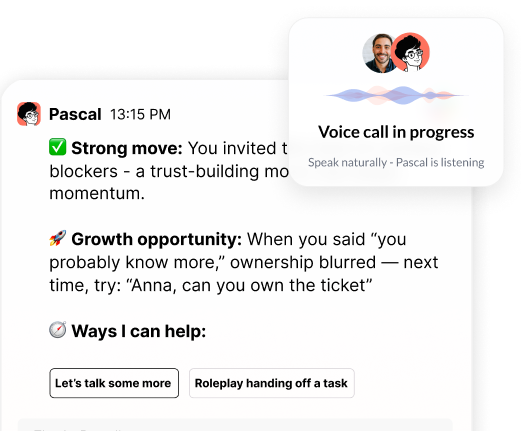
Ready to see how AI coaching works in practice? See how Pascal delivers coaching inside Slack to provide personalized guidance in the flow of work.
Header photo by Shantanu Kumar on Unsplash

.png)
.webp)
“Thank you for setting the great foundation for my promotion; now I have a plan!"

Curious to see how AI Coaching can 10X the impact and scale of your development initiatives. Book a demo today for: