
AI coaching delivers measurable manager improvements within 30–60 days when integrated into daily workflows. Organizations using purpose-built platforms see direct report satisfaction increase by 20% and behavior change in 40–60% of users at 90 days.
The executive team approved the budget. IT completed the integration. Employees received their login credentials. Now comes the question that determines whether your AI coaching investment survives renewal: what results should you expect?
The answer depends on the platform's expertise, contextual awareness, and workflow integration. Generic AI tools provide surface-level advice. Purpose-built coaching platforms deliver behavior change because they understand people science, know your organization, and meet managers where they work.
Organizations see three outcome phases: adoption (weeks 1–4), behavioral improvements (weeks 4–8), and business impact (weeks 8–12).
Weeks 1–4: Adoption Phase
40–60% of managers engage at least once weekly. Engaged users average 3–5 interactions per session, focusing on delegation, feedback preparation, and difficult conversations. Managers who use AI coaching 2–3 times weekly show higher direct report satisfaction than those using it monthly.
Weeks 4–8: Behavior Change Phase
Direct reports notice improvements in communication quality and 1-on-1 effectiveness. Managers report higher confidence navigating challenging situations, particularly performance conversations and team conflict.
Weeks 8–12: Business Impact Phase
Manager effectiveness scores increase among engaged users. Performance reviews become more specific and actionable. Early retention signals emerge as team engagement stabilizes.
AI coaching provides real-time guidance when managers need it, rather than expecting them to recall classroom concepts weeks later. Traditional training suffers from the knowing-doing gap—managers attend workshops, nod along, then return to their desks and revert to old habits.
Human coaching works but costs $15,000+ per manager annually and reaches only senior executives. Learning Management Systems track completion but see low engagement because they're disconnected from actual work. Two-day workshops provide the right information at the wrong time.
Purpose-built AI coaching makes personalized, continuous feedback accessible to all managers at a fraction of traditional coaching costs. Jeff Diana, former CHRO at Calendly and Atlassian, notes: "So much of the real learning and value comes from in-context coaching in the moment to drive performance and solve problems in the moment."
Comparison: Traditional vs. AI Coaching Approaches
Data Breakdown:
• Approach: Traditional Training | Cost per Manager: $2,000–$5,000 | Time to Behavior Change: 6–12 months | Scalability: Limited by facilitator capacity | Measurable Outcomes: Completion rates, post-training assessments
• Approach: Human Coaching | Cost per Manager: $10,000–$25,000 | Time to Behavior Change: 3–6 months | Scalability: Executives only | Measurable Outcomes: Behavioral change, leadership effectiveness
• Approach: LMS Platforms | Cost per Manager: $500–$1,500 | Time to Behavior Change: Variable | Scalability: High | Measurable Outcomes: Completion rates, knowledge retention
• Approach: Purpose-Built AI Coaching | Cost per Manager: $150–$300 | Time to Behavior Change: 4–8 weeks | Scalability: Unlimited | Measurable Outcomes: Behavioral metrics, manager effectiveness scores
Traditional coaching excels at handling complex interpersonal dynamics and building deep relationships. AI coaching excels at scale, consistency, and real-time availability. The best programs combine both: AI coaching for daily guidance, human coaching for high-stakes situations.
The difference between AI coaching that transforms manager effectiveness and one that becomes shelfware comes down to three factors: foundational expertise, contextual awareness, and workflow integration.
Purpose-built coaching foundation. Effective platforms are trained on people science by professional coaches, not just language patterns. This foundation enables the platform to understand workplace dynamics like power differentials, psychological safety, and career development conversations. Managers trust the guidance because it reflects professional coaching standards.
Contextual awareness. AI coaches need four layers of context: individual (role, goals, performance history), organizational (values, competencies, culture), real-time (meeting dynamics, communication patterns), and temporal (performance cycles, goal-setting seasons). Generic tools like ChatGPT lack this organizational memory and provide surface-level advice.
Workflow integration. The best AI coaches join meetings, provide real-time feedback, and live in Slack or Teams where work happens. Pascal accompanies managers to meetings and sits in communication platforms. No separate login, no context re-explanation, no adoption barriers.
Melinda Wolfe, former CHRO at Bloomberg and Pearson, emphasizes: "If we have an innovation right now, it's incumbent upon us as HR leaders to show our companies an economic and effective way to help managers."
First-time managers and newly promoted leaders deliver the fastest measurable ROI because they face the steepest learning curve and have the highest leverage on team performance.
Highest-impact populations:
• New managers (0–18 months in role): 60% report feeling unprepared; AI coaching accelerates capability development
• Mid-level managers (managing managers): Improvements cascade to multiple teams
• Sales leaders: Frequent high-stakes conversations; real-time coaching compounds advantage weekly
• Distributed team leaders: Asynchronous communication challenges; AI coaching provides 24/7 support across time zones
• High-performers being developed for leadership: Proactive skill-building before promotion reduces new manager failure rates
Strategic rollout approach:
Start with new managers or a high-visibility pilot group like directors in a specific function. Measure adoption, engagement depth, and early behavioral signals over 60–90 days. Expand to broader management layers once success patterns are established.
Track three measurement layers—adoption signals, behavioral change indicators, and business outcomes—rather than relying on usage statistics alone.
Adoption signals (weeks 1–4):
• Weekly active users as percentage of total managers
• Average sessions per engaged user
• Repeat usage rate (users returning within 7 days)
• Topic distribution (delegation, feedback, conflict resolution)
Behavioral change indicators (weeks 4–8):
• Manager effectiveness scores from direct reports
• 1-on-1 quality improvements (measured through pulse surveys)
• Feedback frequency and specificity
• Confidence ratings for difficult conversations
Business outcomes (weeks 8–12+):
• Manager Net Promoter Score changes (how likely direct reports are to recommend their manager)
• Time saved on management tasks (documented through user surveys)
• Performance review quality improvements
• Team engagement and retention signals
• Reduction in HR escalations
The most predictive early metric is engagement depth: managers who use AI coaching 2–3 times weekly show higher direct report satisfaction than those using it monthly.
• AI coaching delivers measurable manager improvements within 30–60 days when using purpose-built platforms integrated into daily workflows
• The difference between transformative AI coaching and shelfware depends on three factors: foundational expertise from professional coaches, contextual awareness of your people and organization, and integration into existing workflows
• First-time managers and newly promoted leaders deliver the fastest ROI because they face the steepest learning curve and have the highest leverage on team performance
• Track three measurement layers—adoption signals, behavioral change indicators, and business outcomes—rather than relying on usage statistics alone
• Purpose-built AI coaching provides real-time guidance at a fraction of traditional coaching costs by meeting managers where they work
See how Pascal works inside Slack and Teams. Pascal accompanies managers to meetings, provides real-time coaching, and integrates into your existing workflow. Learn more about Pascal or schedule a demo to see measurable results in your first 90 days.
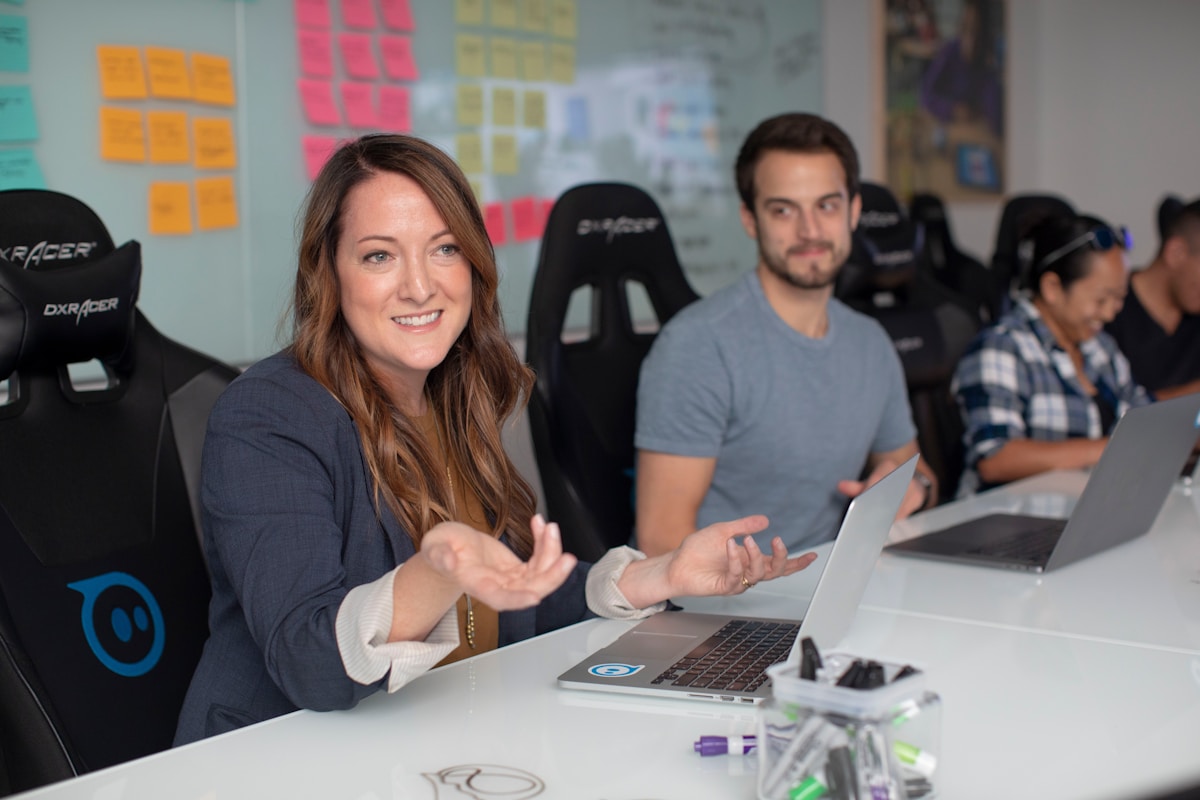
Header photo by LinkedIn Sales Solutions on Unsplash

.png)
.webp)
“Thank you for setting the great foundation for my promotion; now I have a plan!"


Curious to see how AI Coaching can 10X the impact and scale of your development initiatives. Book a demo today for: