

Look for coaching methodology grounded in behavioral science, integration with your existing systems and data, proactive engagement in daily workflow, appropriate escalation protocols for sensitive issues, and measurable outcomes from comparable deployments.
Ask who designed the coaching methodology. Platforms trained by certified executive coaches handle nuanced scenarios (delivering critical feedback, navigating team conflict, coaching underperformers) differently than general-purpose language models. Request specific examples: How does the system guide a manager through a defensive employee conversation? What frameworks does it reference for delegation failures?
Test the depth. Generic advice like "set clear expectations" applies anywhere. Effective coaching connects to your leadership competencies, performance frameworks, and cultural norms. Can the platform reference your specific management philosophy? Does it align with how your organization actually develops people?
Examine the training data. Some vendors fine-tune models on public internet content. Others work with coaching professionals to build domain-specific training sets. The difference shows up in output quality: evidence-based guidance versus repackaged blog posts.
Evaluate customization capabilities. Can the vendor embed your competency models, values, and policies? A VP of Sales needs different coaching than an HR coordinator. The platform should incorporate performance reviews, 360 feedback, and individual development plans—not treat every user identically.
Test organizational memory. Managers shouldn't re-explain their situation in every interaction. The system should reference past conversations, team dynamics, and ongoing challenges. Without this context, coaching remains surface-level.
Ask about data integration. Does the platform connect to your HRIS, performance management system, and learning platforms? Manual data entry kills adoption. The coaching should automatically understand role, team structure, recent reviews, and development goals.
Tools that require managers to remember to log in achieve low sustained adoption. Proactive systems reach out with timely coaching—joining meetings, monitoring communication channels, offering real-time guidance when it matters.
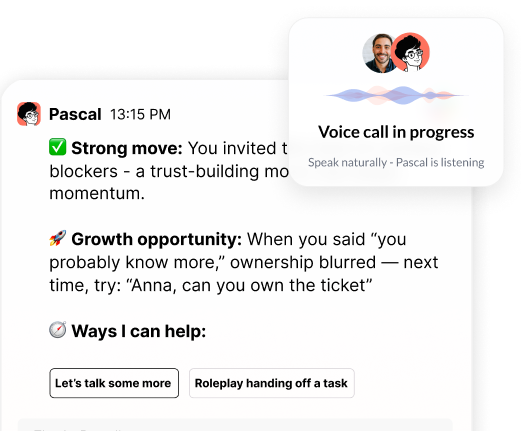
Verify proactive capabilities. Does the platform observe a tense Slack exchange and offer conflict resolution strategies? Can it sit in on a 1:1 and provide feedback immediately afterward? Coaching in the moment drives behavior change. Coaching three days later when a manager finally opens an app does not.
Request pilot data showing weekly active usage over six months, not just initial enthusiasm. Many platforms see strong first-month adoption that crashes by month three. Sustained engagement proves the system delivers ongoing value.
The best solutions embed into tools managers already use (Slack, Teams, Zoom, Google Meet) rather than requiring adoption of another platform. Integration depth determines whether coaching becomes a daily habit or another forgotten login.
Audit technical capabilities. Does the vendor support native integrations with your systems? Can it pull data through robust APIs? Does it offer SSO? How many clicks to access coaching? Context-switching between applications kills adoption.
Test data flow. Can the platform automatically access relevant information without manual entry? Managers won't maintain separate profiles or repeatedly input context. The system should connect to tools you already use.
Enterprise-ready vendors demonstrate clear boundaries around what AI should and shouldn't handle. Without proper protocols, you risk legal exposure and employee harm.
Examine how the platform identifies topics requiring human intervention. Can it recognize when a conversation shifts from "my employee missed a deadline" to "my employee disclosed harassment"? Does it flag discussions about discrimination, mental health crises, or legal matters?
Review escalation protocols. What happens when an employee discusses harassment or mental health concerns? The platform should immediately connect them with appropriate resources—not attempt to coach through situations requiring professional expertise.
Verify compliance standards. Is the vendor SOC2 certified? How do they handle data privacy and security? What guarantees exist that your employee information won't be used to train models or shared with other organizations?
Sensitive Topic Handling:
Data Breakdown:
• Scenario: Missed deadline coaching | AI Coaching Role: Primary guidance | Human Expertise Required: Escalate if pattern continues
• Scenario: Harassment allegation | AI Coaching Role: Immediate escalation | Human Expertise Required: HR investigation required
• Scenario: Performance improvement planning | AI Coaching Role: Collaborative support | Human Expertise Required: HR oversight and documentation
• Scenario: Mental health disclosure | AI Coaching Role: Immediate escalation | Human Expertise Required: Professional counseling referral
• Scenario: Legal concern (FMLA, discrimination) | AI Coaching Role: Immediate escalation | Human Expertise Required: Legal and HR review required
Request customer case studies with specific metrics, not testimonials. How much did manager effectiveness scores increase? What percentage of direct reports reported improved feedback quality? How many hours did managers save? Look beyond vanity metrics like logins and messages sent.
Verify measurement methodology. How does the vendor track behavior change versus engagement? Do they measure application of skills in real work situations? Can they demonstrate correlation between platform usage and performance improvements?
Ask about enterprise infrastructure. Can the vendor support your user volume? What's their uptime guarantee? How do they handle data security at scale? What does their customer success model look like for enterprise deployments? These operational questions reveal whether the vendor has successfully scaled with other organizations.
Examine vendor stability. How long have they been in business? Who are their investors? What's their customer retention rate? You're making a multi-year commitment to a platform that will touch every manager. Financial stability and customer success track record matter.
• Coaching methodology matters more than conversational ability. Verify the vendor trained their system with certified coaches using behavioral science frameworks, not just fine-tuned a language model on internet content.
• Contextual awareness determines relevance. The platform should integrate your competency models, performance data, and cultural values—not deliver generic advice that could apply to any organization.
• Proactive engagement drives sustained adoption. Coaching that reaches out in daily workflow (Slack, Teams, meetings) creates consistent habits. Reactive tools that wait for managers to remember to use them fail.
• Integration eliminates friction. Seamless connections to your existing systems (HRIS, performance management, calendar) mean managers don't manually enter context or switch between applications.
• Guardrails protect your organization. Enterprise-ready vendors demonstrate clear escalation protocols for sensitive topics, SOC2 compliance, and appropriate boundaries around what AI should and shouldn't handle.
Ready to evaluate AI coaching vendors for your organization? Explore how Pinnacle helps companies assess and implement coaching solutions that drive measurable manager effectiveness.
Header photo by Vitaly Gariev on Unsplash

.png)
.webp)
“Thank you for setting the great foundation for my promotion; now I have a plan!"

Curious to see how AI Coaching can 10X the impact and scale of your development initiatives. Book a demo today for: